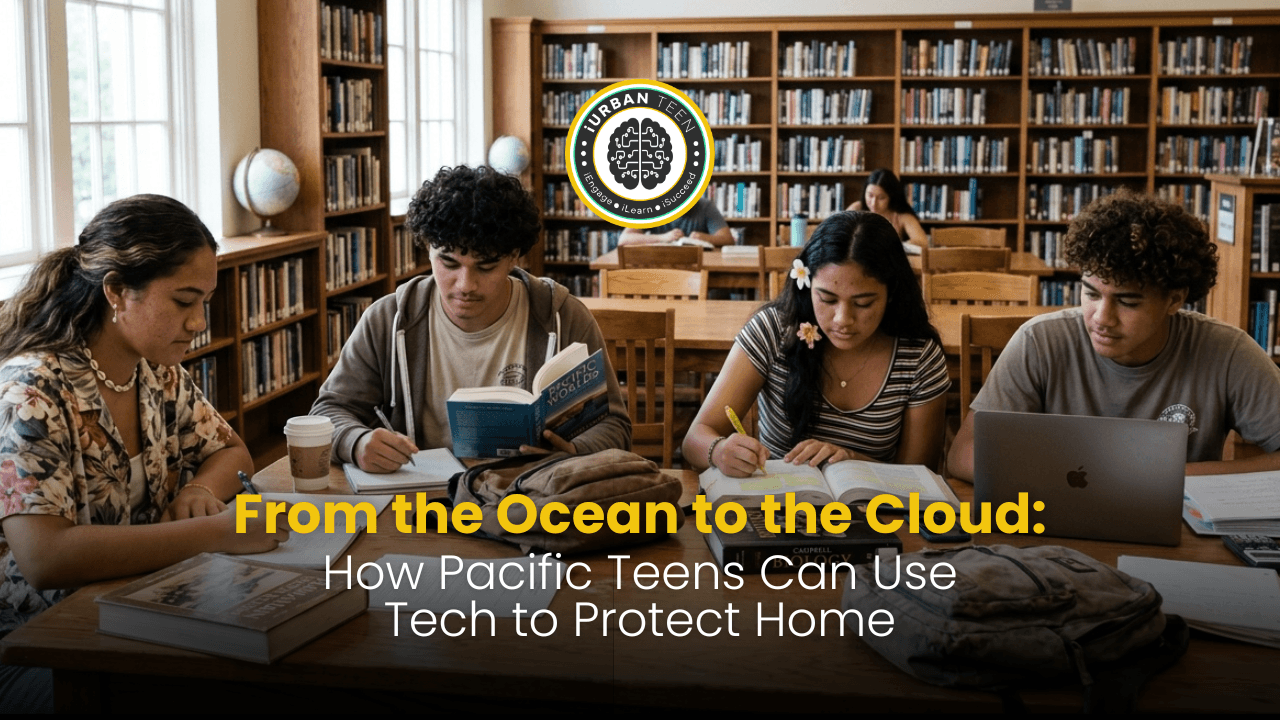
For Pacific Islander communities, the ocean is more than a body of water. It is a source of food, culture, identity, and connection. For generations, Pacific peoples have relied on traditional knowledge to navigate the
From artificial intelligence and drones to mobile apps and renewable energy systems, technology is becoming a powerful tool for addressing some of the Pacific’s biggest challenges. AI can help scientists predict severe storms, flooding, and climate risks, giving communities more time to prepare and stay safe. Drones can monitor coastlines, track erosion, and capture images of areas that are difficult to reach on foot. Mobile apps allow researchers and community members to record information about coral reefs, marine life, and water quality, helping protect ocean ecosystems for future generations.
For teens interested in STEM, these innovations aren’t just happening in distant laboratories. Young people are increasingly using technology to solve local problems in their own communities. Some are exploring solar and renewable energy solutions to reduce reliance on costly imported fuels. Others are using coding, mapping tools, and environmental data to better understand how climate change affects island communities. Technology can open doors to careers in science, engineering, environmental protection, and community leadership while making a positive difference at home.
Perhaps the most exciting opportunity lies in bringing together traditional Pacific knowledge and modern innovation. Technology works best when it supports the values and wisdom that communities have developed over generations. By combining ancestral understanding of the ocean, weather, and natural resources with powerful new digital tools, Pacific Islander youth can help build a future that is both innovative and deeply rooted in culture. The next great environmental problem-solver, app developer, climate scientist, or renewable-energy innovator may be a Pacific teen who wants to protect the place
If you are looking to learn more about the impact of the changing climate and your community, look out for iUrban Teen’s iMap class to help you spot the early warning signs.
Sources:
- World Economic Forum. Spatial Computing, Wearables and Robots: AI’s Next Frontier (for broader AI and emerging technology trends). [weforum.org]
- National Oceanic and Atmospheric Administration (NOAA) resources on coastal monitoring, climate resilience, and environmental technology.
- United Nations Development Programme (UNDP) Pacific initiatives on climate resilience and digital innovation.
- Pacific Community (SPC) programs supporting climate adaptation, technology, and youth engagement across Pacific Island nations.